

 Book An Appointment
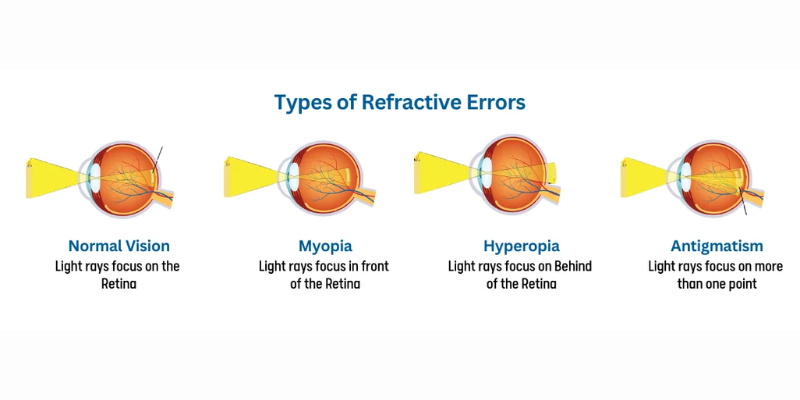
Refractive eye surgery refers to a group of surgical procedures designed to correct common vision problems such as myopia (nearsightedness), hyperopia (farsightedness), astigmatism, and presbyopia. By reshaping the cornea or implanting special lenses, these treatments reduce or eliminate the need for glasses or contact lenses, providing patients with greater visual independence.
Refractive surgery may be suitable for individuals who:
LASIK (Laser-Assisted In Situ Keratomileusis)
The most common procedure, reshaping the cornea with an excimer laser to correct refractive errors.
PRK (Photorefractive Keratectomy)
A surface laser procedure suitable for patients with thinner corneas, reshaping without creating a corneal flap.
SMILE (Small Incision Lenticule Extraction)
A minimally invasive laser procedure that corrects myopia and astigmatism through a tiny incision.
Implantable Collamer Lenses (ICL)
Artificial lenses implanted inside the eye, especially for patients unsuitable for laser surgery.
Refractive Lens Exchange (RLE)
Replacement of the natural lens with an artificial intraocular lens, ideal for patients with presbyopia or early cataract.
Astigmatic Keratotomy (AK)
Small incisions in the cornea to correct mild to moderate astigmatism.
Although generally safe, refractive procedures may have risks :