What Is a Pterygium?
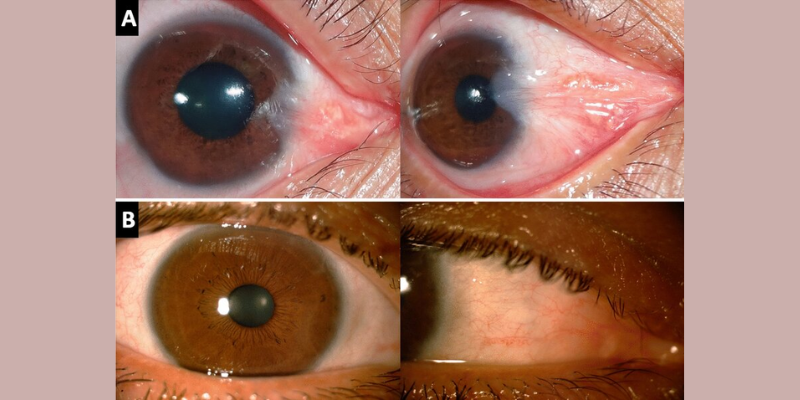
A pterygium is a benign, fibrovascular growth of the conjunctiva that extends onto the cornea. While small pterygia may remain stable, some grow progressively, causing irritation, redness, and distortion of vision. Recurrent or complicated pterygium refers to cases where the growth returns after surgery, grows aggressively, or is associated with scarring, astigmatism, or ocular surface inflammation.
Symptoms & Signs
Patients with recurrent or complicated pterygium may experience :
- Redness and irritation in the affected eye
- Foreign body sensation or discomfort
- Blurred or distorted vision due to corneal involvement
- Cosmetic concern due to visible growth
- Chronic tearing or dryness
- Recurrence at the surgical site after previous removal
Causes & Risk Factors
- Sunlight / UV exposure: Excessive exposure is a major risk factor
- Environmental irritants: Dust, wind, smoke, or chemical exposure
- Previous surgery: Pterygia that recur after initial removal are more aggressive
- Genetic predisposition: Some patients are more prone to recurrent growth
Diagnosis & Examination
While generally safe, corneal tattooing may involve some risks :
- Detailed slit-lamp examination to assess size, thickness, vascularity, and corneal involvement
- Measurement of corneal curvature to evaluate astigmatism caused by pterygium
- Imaging or photography for surgical planning and follow-up
- Assessment of ocular surface health to guide optimal treatment strategy
Management Approaches
Non-Surgical Management (Early or Mild Cases)
- Lubricating eye drops or ointments to relieve irritation
- Anti-inflammatory drops to reduce redness and discomfort
- UV-protective sunglasses to slow progression
Surgical Management (Recurrent / Complicated Cases)
Excision with Conjunctival Autograft
Removing the pterygium and covering the bare sclera with a graft from the patient’s own conjunctiva to prevent recurrence
Amniotic Membrane Transplantation
Used in cases with extensive scarring or recurrent growth to promote healing and reduce inflammation
Adjunctive Therapies
Use of mitomycin-C (MMC) to reduce recurrence risk
Customized Approach
Surgery tailored based on size, recurrence history, and ocular surface condition
Risks & Complications
- Recurrence of pterygium after surgery (more common in recurrent cases)
- Scarring, irregular astigmatism, or vision distortion
- Infection or delayed healing
- Discomfort or redness postoperatively
- Rare complications such as corneal thinning or graft failure
Postoperative Care & Recovery
- Use of prescribed anti-inflammatory and antibiotic eye drops
- Avoid rubbing or pressing the eye
- Protective eyewear to prevent UV exposure and trauma
- Regular follow-up to monitor healing, detect recurrence early, and manage complications
- Recovery of visual clarity and ocular comfort usually occurs within weeks



 Book An Appointment